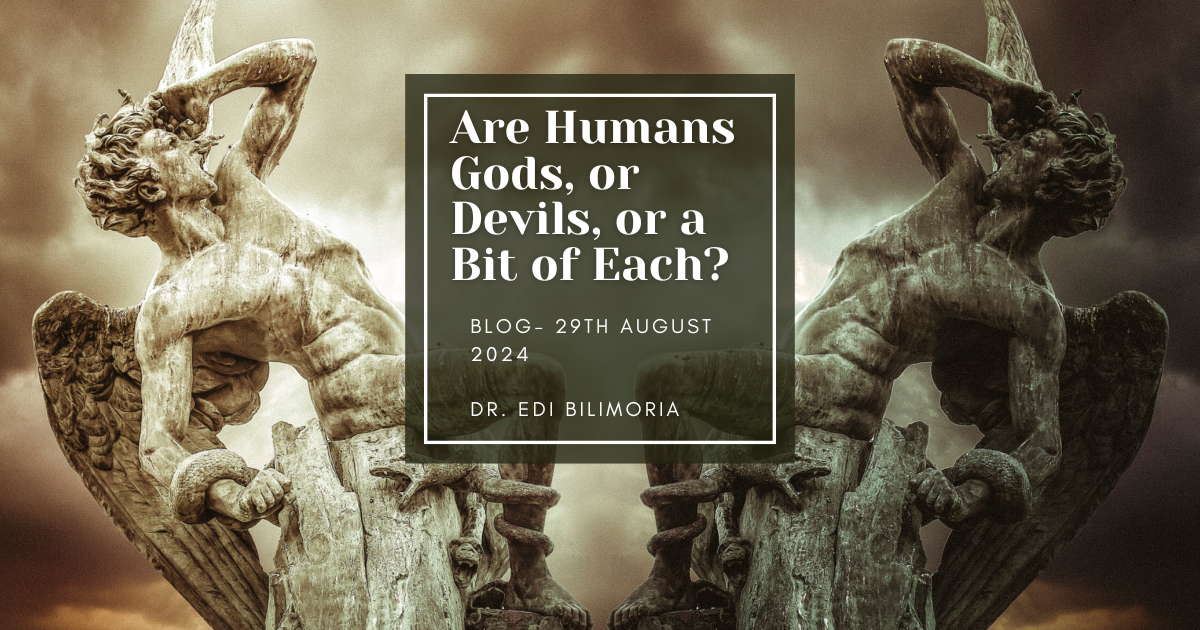
Are Humans Gods, or Devils, or a Bit of Each?
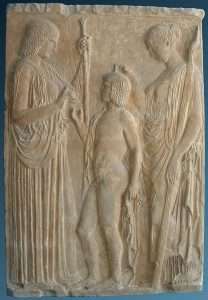
Bacchic and Dionysiac Rites of the Greek Mystery Schools allegorize the composite nature of man. The Rites are based on the allegory of the youthful god Bacchus (Zagreus, or Dionysos) being torn to pieces by the giant Titans, who then scatted the dismembered body of the god far and wide. Jupiter, the Father of Bacchus and the Demiurgus of the universe, beholding this crime, hurled his thunderbolts at the Titans and slew them, burning their bodies to ashes with heavenly fire. From the ashes of the Titans, which also contained a portion of the Bacchic body which the Titans had partly devoured, the human race was created. Thus the mundane life of every man was said to contain a part of the Bacchic (therefore godly) life. Accordingly then, the Rites taught that earthly man’s composite nature comprised his lower nature, consisting of fragments of the giant Titans; and his higher, immortal, nature as the sacred life of the god Bacchus. So the Bacchic state signifies the unity of the rational soul in a state of self-knowledge; and the Titanic state, the diversity of the rational soul, which by virtue of being scattered, loses the consciousness of its own essential one-ness or unity.iv The giants accomplished the fall of Bacchus by getting him to become fascinated with his own image in a mirror, signifying engrossment in the sea of illusion (māyā)—the lower world fashioned by the Titans—which signals the downfall of Man. Hence, ordinary man is capable of either a Bacchic—rational—existence, or a Titanic—irrational—existence, and for the vast majority both existences in varying proportions.
Apropos, given the hordes of holidaymakers these days thronging major tourist sites toting their ‘selfie’ sticks, are human narcissistic traits basically any different now?
So are we human beings of flesh and blood gods, or devils, or a bit of each? There are those who say, ‘Show me God and the Devil in flesh and blood and I’ll believe in them.’
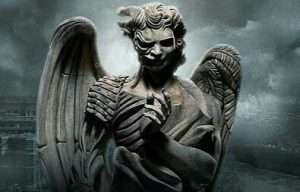
Quite easily done. Just look at yourself in a mirror. If you have clear vision and a sound brain to interpret what you see, you will see both God and the Devil—and remember: Truth is not facetious!
But let it be said that the wisdom–religion–philosophy of Persia as indeed of Greece, Egypt, India, and all great centres of esoteric learning, are united in affirming that there is no ‘Evil One’—by whatever name we might care to call that shadow, e.g. Ahriman, Devil, Satan, Diabolos, Māra—as an identifiable, personal entity or being.
It therefore follows that as there is no independent Principle of Evil per se, there can be no real evil, as ‘real’ implies a substanding principle. Certainly there have been evil individuals and groups—we hardly need any convincing about that. The evil conditions around us are in proportion to the extent that there is a diminishment of the Good through our misuse of free-will and consequent perversion of Providential energies.
Moreover, ‘good’ and ‘evil’ are the words used to describe the two dualistic principles (issuing from the One). But they are unsatisfactory words, the esoteric meaning (the key) being given out in sacred texts like the Gāthās of Zarathuśtra (sacred hymns cast in the form of religious poetry). In them, we understand that the primal duality is not of good and evil, but is of spirit and matter, of reality and non-reality, of light and darkness, of construction and destruction, the two poles between and across which the universe is woven and without which no universe can exist.
From Volume I of “Unfolding Consciousness: Exploring the Living Universe and Intelligent Powers in Nature and Humans” – “A Panoramic Survey: Science Contrasted with the Perennial Philosophy on Consciousness and Man.” Available here in the Four Volume Hardback set through Shepheard Walwyn Publishers and globally on Amazon Kindle.